Event planning
How to Plan an Event Budget: Priorities and Cost Control
Create a workable event budget by managing venue, catering, decoration, music, photography and contingency costs around clear priorities.
Building an event budget is more than writing prices into a spreadsheet. It requires deciding which experiences matter most, understanding variable costs and setting boundaries for late decisions.
Instead of beginning with one total alone, divide the budget into decision areas. This makes it easier to see how a change in one category affects the options available elsewhere.
Define three priorities first
The couple or event team can each write down their three most important elements. Guest comfort, food, music, photography, decoration or technical production can then be compared.
A budget in which everything is equally important only postpones difficult choices. Once genuine priorities are clear, simplifying less important areas becomes easier.
Separate fixed and variable costs
Venue use, some technical setup and defined services may be fixed. Per-person catering, table quantities, printing and favours change with attendance. Mark which group each cost belongs to.
A small increase in guests may affect more than food. It can also require tables, chairs, florals, staffing and printed materials. Calculate the combined per-person impact rather than one category alone.
Compare quotations on the same scope
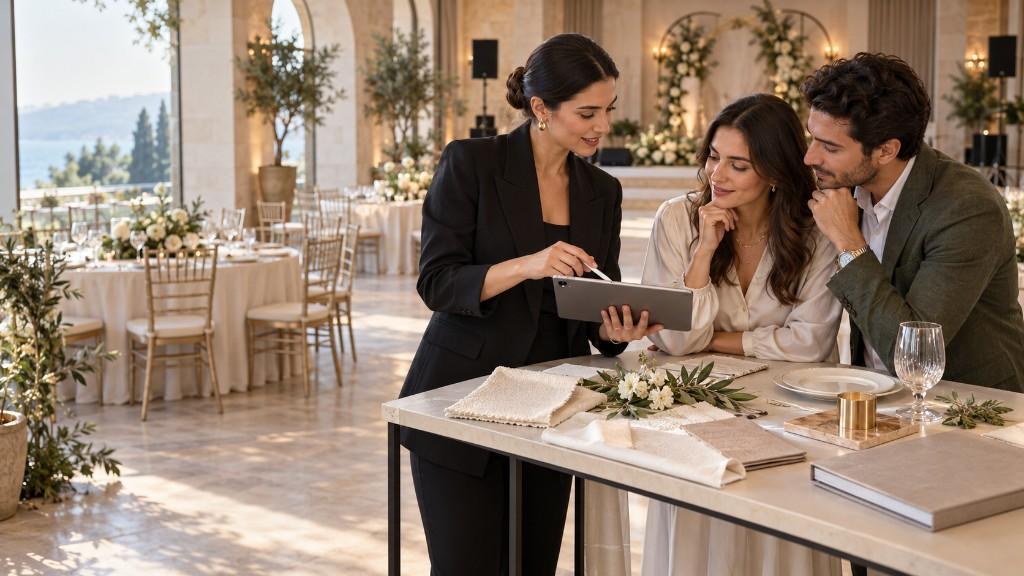
Before comparing two prices, confirm that they include equivalent work. Ask whether setup, removal, transport, tax, staffing, overtime and equipment are included. A low initial figure may grow through later additions.
Review quotation validity, payment schedule, cancellation and date-change terms in writing. Add important verbal agreements to the contract or a confirmation email.
Keep a contingency within the budget
Allocating the complete budget during the first planning stage removes flexibility. Transport changes, additional equipment, attendance increases or weather-related requirements may appear later.
The appropriate contingency depends on event complexity. The important point is not to treat it as money already available for extra decoration or products.
Create visual impact through focus
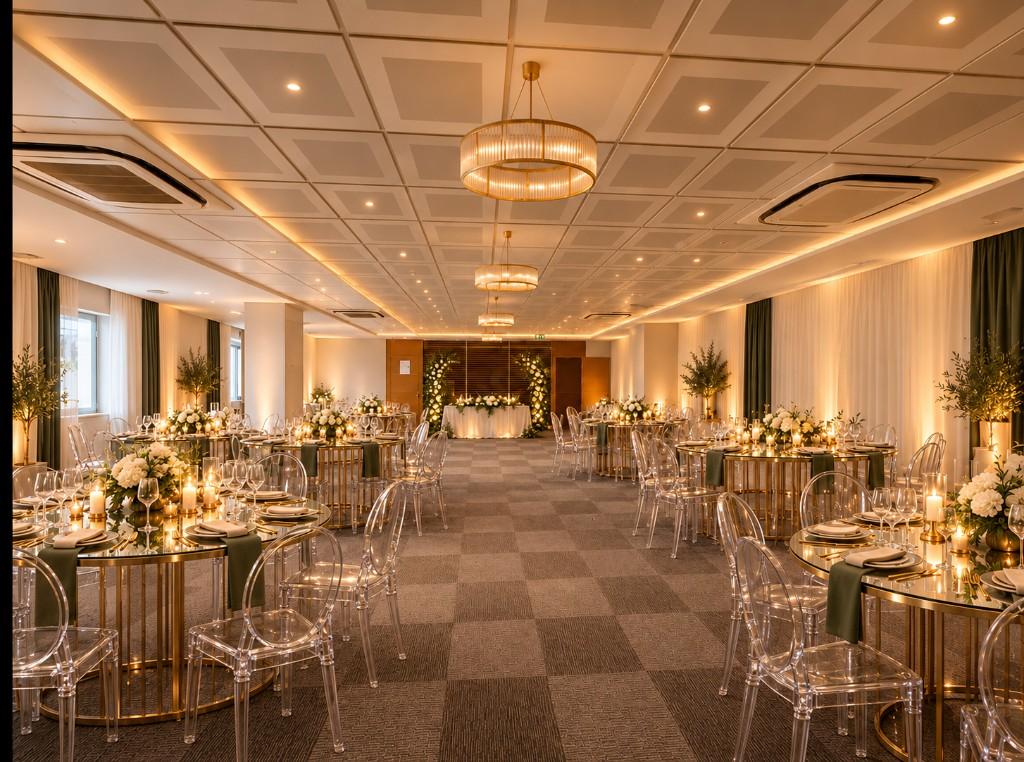
Instead of decorating every surface, select focal points such as the first view on arrival, ceremony area, table centres or stage. A design that uses the existing character of the room can feel coherent with fewer materials.
Compare disposable details with items that can be rented or reused in different areas. A floral arrangement may move from the ceremony to a photography or welcome point.
Update actual costs regularly
Use separate columns for estimate, accepted quotation, amount paid, remaining balance and deadline. Keep the full outstanding amount visible so a deposit is not mistaken for the total cost.
A short weekly review prevents small differences from accumulating. Whenever a new expense is added, decide which budget category will fund it at the same time.
A good event budget does not simply seek the lowest total. It protects priorities, makes scope understandable and reduces surprise decisions as the event approaches.