Venue selection
Event Venue Selection Checklist: What to Confirm Before You Book
Use this practical checklist to assess capacity, access, operations, technical needs, pricing and contract terms when comparing venues for any gathering.
An event venue is more than a room that looks appealing. Travel, circulation, service, technical provision and contract terms all shape the same guest experience. The purpose of a first visit should therefore be to compare your needs with the venue’s actual conditions, not to make an immediate decision.
Save this checklist and ask the same core questions at each visit. It will make comparisons more consistent. Treat website details as a starting point and confirm capacity, pricing and services in a current written proposal and during an on-site review.
Define your requirements before the visit
Prepare a short event brief before speaking to venues. Include your preferred date or date range, event type, estimated attendance, accessibility needs, catering format, music and essential technical requirements. If numbers are uncertain, set a realistic lower and upper scenario.
Separate priorities into three groups:
- Non-negotiables: an accessible entrance, a required date or presentation facilities that would rule out the venue if unavailable.
- Preferences: daylight, a separate welcome area or a particular table format that matters but remains flexible.
- Extras: a photo moment or specialist styling that can be assessed against the final budget.
This distinction prevents an impressive image from hiding a practical gap.
Do not treat capacity as one fixed number
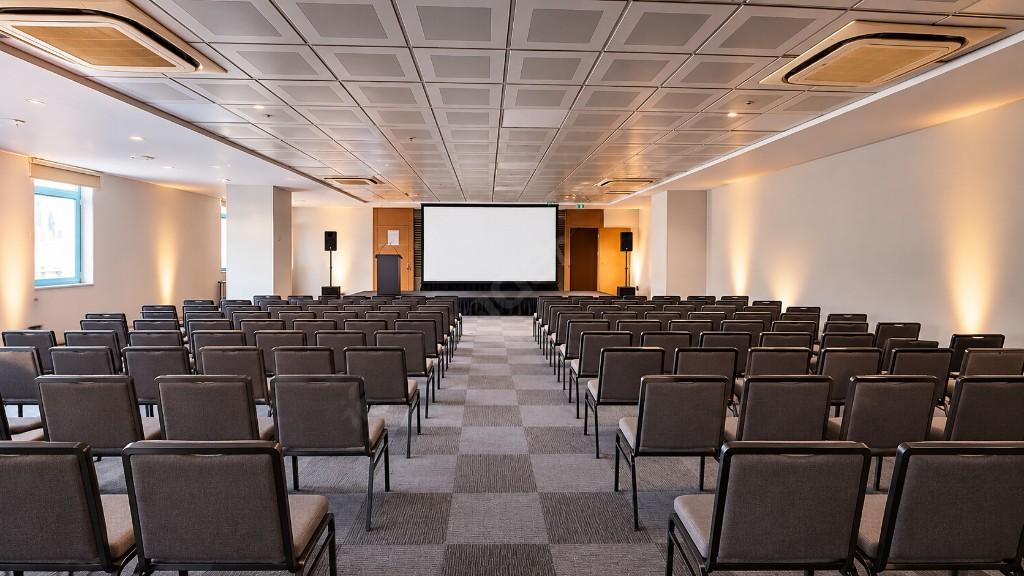
Venue capacity depends on layout. Round tables, banquet rows, a stage, dance floor, service stations and technical equipment all change the usable area. Instead of asking only how many people fit, ask to review a layout for your intended format.
Review a realistic layout
Share the estimated attendance, table style, stage or speaking area and the circulation space you need. Check whether guests and service staff can move comfortably once chairs are occupied. Emergency exits, entrances and accessible routes must not be narrowed by furniture or styling.
Where possible, assess capacity through a layout attached to the proposal rather than a verbal maximum. If no verified fixed capacity is available, an event-specific plan is more useful than an invented headline number.
Walk through the complete guest journey
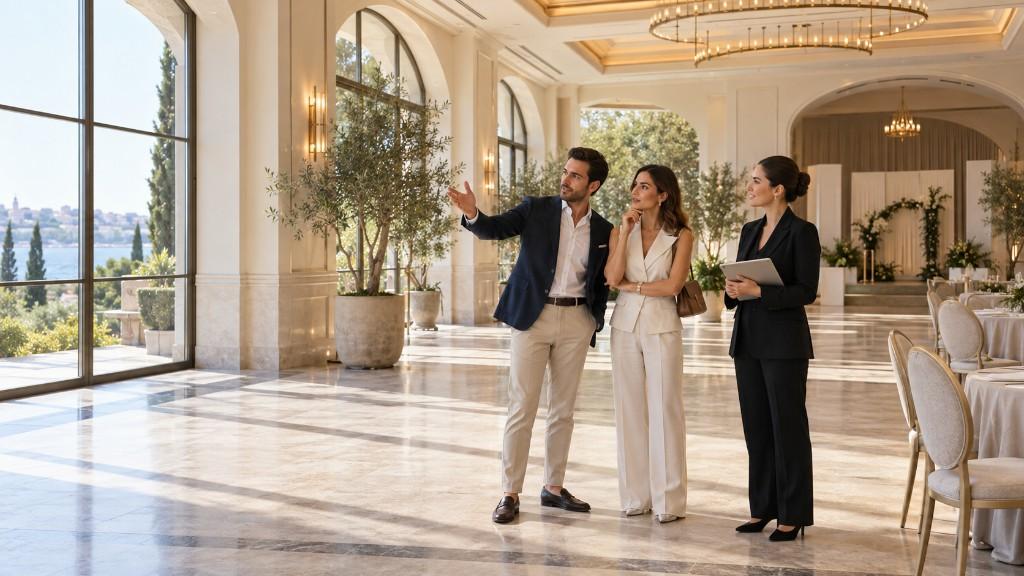
Move through the venue as a guest would. How do people travel from a vehicle or public transport stop to the entrance? Where will the welcome happen? Are routes between cloakroom, toilets, main room and any outdoor space clear? Can a guest with limited mobility use the same journey independently?
Check these points on site:
- Entrances, ramps, lifts and door widths.
- The position and accessibility of toilets.
- A waiting alternative for rain, heat or cold weather.
- Circulation for pushchairs, older guests and families with children.
- Parking terms where parking exists, or nearby transport alternatives where it does not.
Do not assess location by map distance alone. Event-time traffic, safe pedestrian access and the late-night return journey also matter.
Clarify technical and operational details
Ask what infrastructure is available for music, speeches, presentations and lighting. “A sound system is included” is not enough detail. Coverage, microphone types, connections, sound restrictions, technical responsibility and the backup plan should all be clear.
Power points, internet access, a preparation room, loading access, supplier hours and setup time can affect the programme. If you plan to bring an external photographer, musician, stylist or production team, confirm approval requirements, insurance and possible fees.
For catered events, discuss service style, tastings, allergen communication and options for children or special diets. The kitchen and service route should work without disrupting guest circulation.
Assess visual impact against real conditions
Whenever possible, view the venue at a time similar to your planned event. Daylight, artificial light and the room in empty and fully dressed states can produce very different impressions. Compare visuals from different sources and support your decision with an in-person visit.
Useful styling questions include:
- Which treatments may be fixed to walls, ceilings and floors?
- Are there restrictions on candles, confetti, suspended items or strong adhesives?
- How much setup and breakdown time is available?
- Are the venue’s tables, chairs and linens included in the quoted price?
- Is there a deposit for damage or unusual cleaning?
Never order a made-to-measure item from a photograph. Confirm stage, backdrop and textile measurements on site with an authorised contact.
Compare proposals and contracts on the same scope
Two prices are comparable only when they include the same services. Ask for venue hire, food, staff, furniture, technical equipment, cleaning, taxes and potential overtime to be shown clearly.
The contract should define the date and hours, payment schedule, cancellation or postponement terms, the deadline for final attendance, supplier rules and each party’s responsibilities. If a significant promise was made verbally, ask for it to be included in writing.
Create a simple decision record
After each visit, record notes under five headings: fit, guest comfort, operations, budget clarity and communication. A numeric score is optional. Identifying risks and items still awaiting confirmation is often more useful.
Before deciding, place all open questions into one email and read the current proposal, sample layout and draft contract together. The strongest venue choice is not necessarily the one with the longest feature list. It is the one that can meet your needs clearly, safely and practically.